
What Happens After the Big Money Arrives
There’s nothing like the feeling of a lump sum check landing in your account. A year-end bonus, a tax refund in the spring, or an inheritance can put tens of thousands of dollars into your hands almost instantly. With one decision, you can pay off debt, finally start an emergency fund, or even max out your Roth IRA. It’s fast and satisfying.
But here’s the part no one talks about:
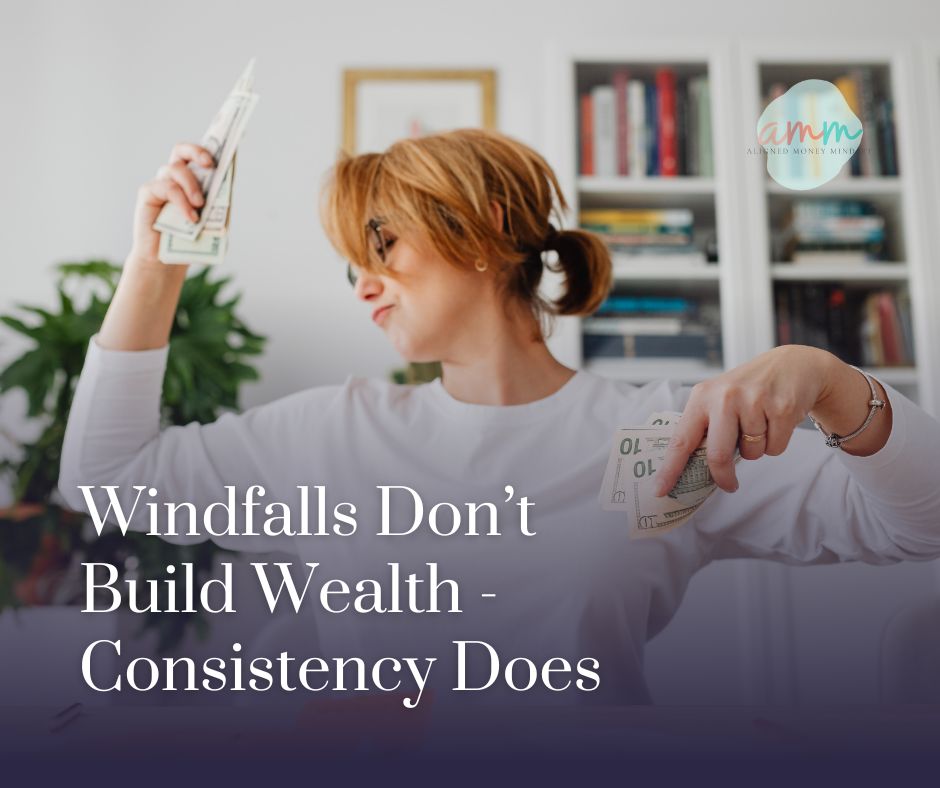
Windfalls don’t build wealth — consistency does — and that difference changes how you use unexpected money.
A lump sum can accelerate progress, but without strong money habits, it can disappear just as quickly as it arrived. Once the excitement fades and the money is gone, you’re left with the same financial patterns you had before.
This post isn’t about choosing between a lump sum and small steps. It’s about understanding the role each plays. Whether you’ve received a bonus, a refund, or another large sum, how you think about and plan for that money matters more than how much you have. Real financial change happens day to day, not one-and-done.
Windfalls Are Powerful — But They Don’t Build Wealth
A windfall creates the feeling that one decision can fix everything at once, whether that’s wiping out a credit card balance, jump-starting an emergency fund, or investing in a single move. That sense of instant results is powerful, but it’s also why windfalls alone don’t build lasting financial change.
That deserves to be acknowledged. A windfall is an accelerator. It can push you forward faster than your normal monthly budget allows.
The challenge is what happens next.
Windfalls scratch the itch for immediate gratification. They create progress without requiring behavior change. This is why windfalls don’t build wealth on their own — they move money, not habits. When the extra money is gone, your existing patterns remain, and without new systems in place, the outcome often doesn’t change.
Why Consistency Builds Wealth (Even When It Feels Slow)
A one-time action does not equal a sustainable behavior.
Saving $50 or $100 per month may not feel impressive, but that habit matters. Repeated actions create consistency, and consistency builds momentum. Over time, that momentum strengthens your financial muscle and separates temporary progress from lasting change.
Consistency rarely feels exciting. There’s no dramatic moment to celebrate and no big check to point to. Still, without consistent behavior, a windfall becomes a brief boost rather than a turning point.
Starting Small Is How Habits Form
Many people believe they need a big check to get started. Thoughts like these are common:
“I’ll invest once I have a couple thousand dollars.”
“Saving will make sense when I earn more.”
“Paying down debt can wait until after my bonus.”
Starting small isn’t the end goal — it’s the entry point. A $50 monthly investment, a $100 extra payment toward debt, or even a $10 automatic transfer to savings begins a process your future self benefits from. Habits are built through repetition, not single acts.
A Personal Example: How Small, Automatic Contributions Add Up
This isn’t a story about having access to the perfect account — it’s a story about what happens when a habit runs long enough.
I started investing in my early 20s because my employer automatically invested 3% of my paycheck into a 401(k) and matched it. For more than ten years, that contribution stayed the same. Part of the match went unused, and there was no sense that I was doing anything special or optimized.
What I did do was stay consistent. The money came out automatically, and I didn’t miss it because I never saw it.
Over time, that small percentage — paired with consistency and employer matching — grew quietly in the background. Years later, I increased my contribution to the full match and eventually to the point where I maxed out my 401(k). After only two years of maxing it out, that account alone is on track to reach over $3 million by age 65, even if I never invest another dollar.
I didn’t become an investor overnight. I became one because a small habit ran long enough to change my trajectory.
What Happens When Income Spikes Without Habits or a Plan
One of the clearest examples of why income alone doesn’t guarantee long-term financial security comes from professional sports.
Research from the National Bureau of Economic Research examined former NFL players and found that bankruptcy filings began soon after players left the league and continued at a meaningful rate for years afterward.
These retired players experienced significant income spikes early in life, followed by a sharp decline after retirement.
Approximately 15.7% of retired players had filed for bankruptcy within 12 years of retirement, and higher lifetime earnings or longer careers did not significantly reduce this risk.
In other words, even extraordinary income was not enough on its own to prevent financial distress when it wasn’t paired with long-term planning, consistent saving, and strong financial habits.
What’s important here isn’t the profession, it’s the pattern. These players didn’t struggle because they lacked income or opportunity. They struggled because short-lived income spikes weren’t supported by systems designed for life after the money slowed down.
This mirrors what happens with bonuses, tax refunds, inheritances, or any other windfall: money doesn’t change behavior. Habits do.
Why Windfalls Don’t Build Wealth — and Habits Do
This is the mindset shift that matters most.
A windfall can accelerate progress toward your goals.
Consistency is what keeps progress going long after the windfall is gone.
A bonus may help you get ahead on debt, but unchanged spending habits can bring that debt back.
The same pattern shows up with tax refunds — they can boost savings, but without ongoing contributions, the next emergency can still derail you.
Think of it this way: the lump sum gives you the sprint, while your habits provide the endurance. Windfalls support progress, but they shouldn’t carry the entire load.
The Identity Shift That Actually Builds Wealth
Consistency doesn’t just grow accounts — it changes who you are in relation to money.
When you save or invest regularly, you stop waiting to feel “ready.” Over time, you shift from someone who hopes to build wealth to someone who does. That identity shift is subtle but powerful.
Once you see yourself as a person who builds wealth through consistent choices, a bonus or refund becomes a tool — not a lifeline.
What Should You Do With a Windfall?
Before deciding how to use unexpected money, pause. Windfalls often come with relief and pressure at the same time. Acting too quickly can turn a meaningful opportunity into a missed one.
If you know the money is coming — even a week in advance — plan before it hits your account. Decisions made ahead of time are usually calmer and clearer.
As you think it through, use these guiding principles:
- Create space before acting so decisions aren’t purely reactive
- Decide what this money is meant to support — stability, freedom, or long-term growth
- Use part of the windfall to accelerate an existing goal
- Use another part to reinforce habits you want to keep after the initial windfall has been put to work.
That might look like automating savings, increasing a retirement contribution, simplifying how you manage your money, or setting up a system you can maintain without another windfall.
The goal isn’t perfection. It’s about making decisions today that support the habits you’ll need tomorrow.
Don’t Wait for the “Perfect Amount” to Start
One of the biggest myths in personal finance is that you need a certain number before taking action. Many people wait for a better job, a larger check, or the “right” moment.
In reality, most people don’t have an income problem — they have a waiting problem.
Wealth isn’t built by one big decision. It’s built by decisions you repeat. Starting with what you have today builds the confidence and consistency that make future windfalls more effective — not necessary.
Conclusion: The Habit Is the Transformation
Windfalls can create momentum, but momentum without discipline doesn’t last. If unexpected money comes your way, use it thoughtfully. Celebrate the opportunity it provides and plan for it intentionally.
Just don’t let it replace the daily habits that change your financial life.
Windfalls don’t build wealth.
Habits sustain it.
And the person you become through small, consistent steps is the person who builds lasting wealth.
Work With Me
If this resonated, you may not need more information — you may need support building consistency in a way that fits your life. That’s the work I do as a money coach: helping people move from waiting to steady, confident action.
You don’t need a windfall to begin — and you don’t have to do this alone.

